Coffee Pour Over Instructions: A Comprehensive Guide
Embark on a journey to unlock exceptional coffee flavor! This guide details the art of pour over, a brewing method celebrated for its clarity and nuanced taste profiles․
Discover how consistent, fresh water infusion, unlike immersion techniques, efficiently extracts coffee solubles, yielding a superior cup—a truly rewarding experience for coffee enthusiasts․
Pour over coffee represents a beautiful intersection of simplicity and control, offering a uniquely rewarding brewing experience․ Unlike automated drip machines, pour over places you in the driver’s seat, allowing meticulous management of every variable – from water temperature to pour speed․ This manual process isn’t about complexity; it’s about connection, fostering a deeper appreciation for the coffee itself․
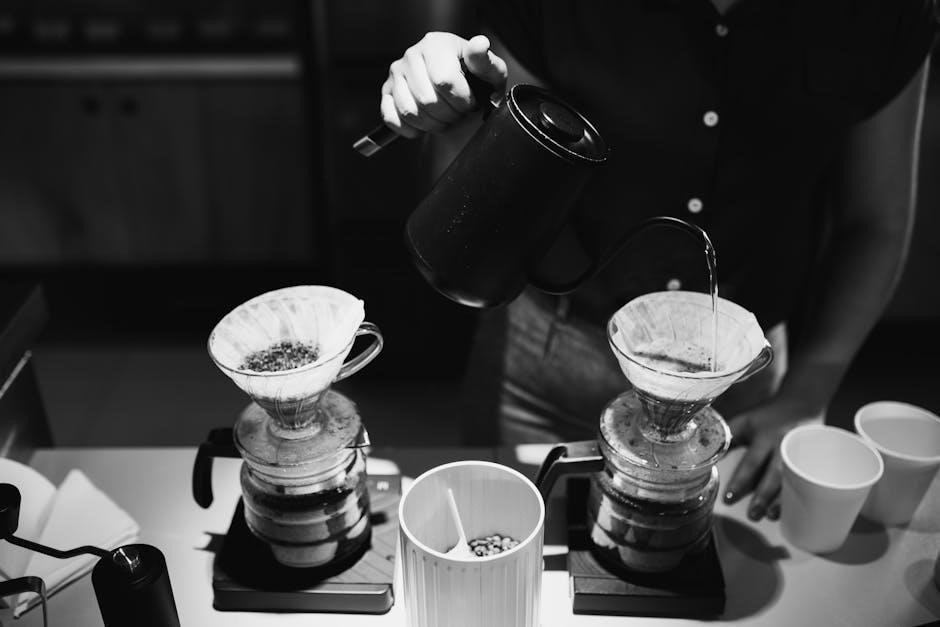
Historically, the method evolved from traditional Japanese and Scandinavian brewing techniques, emphasizing clean, bright flavors․ Today, it’s a global phenomenon, championed by coffee aficionados seeking to elevate their daily ritual․ The core principle involves slowly saturating coffee grounds with hot water, allowing gravity to do the work․ This contrasts with immersion methods like French press, where coffee steeps in water․
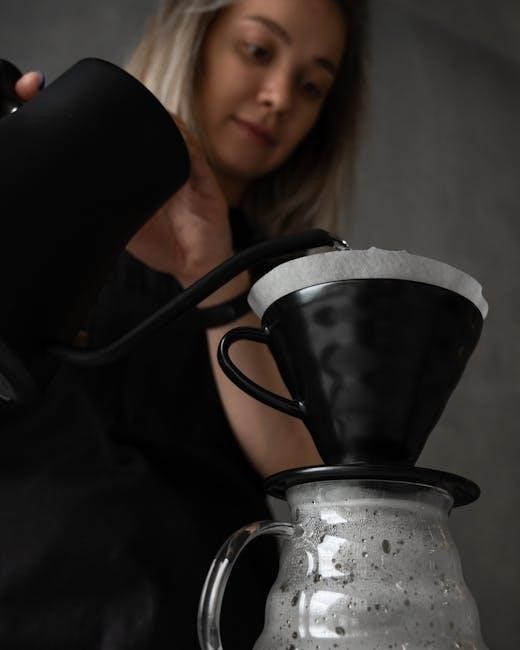
The result? A cup brimming with clarity, showcasing the bean’s inherent characteristics․ Expect a cleaner body and more defined flavor notes compared to standard drip coffee, making pour over an ideal choice for exploring diverse coffee origins and roast levels․
Why Choose Pour Over? (Flavor & Control)
The allure of pour over lies in its unparalleled ability to unlock a coffee’s full flavor potential․ Because it’s an infusion method, utilizing a constant supply of fresh water, pour over excels at extracting coffee solubles more efficiently than immersion techniques like the French press․ This translates to a brighter, cleaner cup, free from sediment and with a more nuanced flavor profile․
However, flavor is only half the story․ Pour over grants you complete control over the brewing process․ You dictate the water temperature, pour rate, and saturation – all critical factors influencing the final result․ This level of control allows for experimentation and customization, enabling you to tailor each brew to your precise preferences․
Ultimately, choosing pour over is choosing an experience․ It’s a mindful practice that rewards patience and attention to detail, delivering a consistently superior cup and a deeper connection to your coffee․
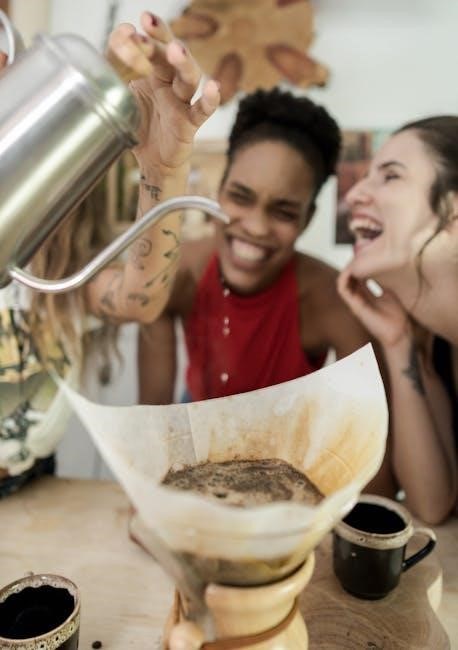
Essential Equipment
Embarking on your pour over journey requires a few key pieces of equipment․ First, a pour over dripper – popular choices include the Hario V60, Kalita Wave, and Chemex, each offering a slightly different brewing experience․ Next, you’ll need filters, available in paper or reusable metal options, impacting flavor clarity․
A gooseneck kettle is highly recommended, providing the precise control needed for a consistent, even pour․ While not absolutely necessary, it significantly enhances the process․ Crucially, a quality coffee grinder – ideally a burr grinder – is essential for achieving a consistent grind size, vital for optimal extraction․
These tools, when combined, empower you to consistently brew exceptional pour over coffee, unlocking the full potential of your chosen beans․ Investing in quality equipment is an investment in your coffee enjoyment․
Pour Over Dripper (Hario V60, Kalita Wave, Chemex)
The pour over dripper is the heart of the brewing process, and several excellent options exist․ The Hario V60, with its spiral ribs and large cone, promotes a fast, clean brew, favored for its clarity․ The Kalita Wave features a flat-bottom design and wave filters, offering more consistent extraction and forgiving brewing․
Finally, the Chemex, an iconic all-in-one brewer, utilizes thicker filters for an exceptionally clean, sediment-free cup․ Each dripper influences flow rate and extraction, impacting the final flavor profile․ Choosing the right dripper depends on your preference for control, consistency, and desired cup characteristics․
Experimenting with each allows you to discover which best suits your taste and brewing style, unlocking the full potential of your coffee beans․
Filters (Paper vs․ Metal)
The filter you choose significantly impacts the final cup’s clarity and body․ Paper filters, commonly used with Hario V60 and Kalita Wave, trap oils and sediment, resulting in a cleaner, brighter brew․ They come in bleached and unbleached varieties; rinsing bleached filters is recommended to remove any papery taste․
Metal filters, often used with Chemex or as a reusable alternative, allow more oils and fine particles to pass through, creating a fuller-bodied, richer cup․ However, this can also lead to more sediment․
The choice depends on your preference: a clean, nuanced flavor with paper, or a bolder, more textured experience with metal․ Consider experimenting to find what best complements your chosen coffee beans․
Gooseneck Kettle (Importance of Controlled Pouring)
A gooseneck kettle is a cornerstone of successful pour over brewing․ Its uniquely designed spout provides unparalleled control over the water flow, crucial for even saturation of the coffee grounds․ Unlike standard kettles, the gooseneck allows for a slow, precise, and consistent pour․
This controlled pouring is essential for achieving optimal extraction․ It prevents channeling – where water finds the path of least resistance – ensuring all coffee particles are evenly contacted․ While not absolutely necessary, a gooseneck dramatically improves consistency and repeatability․
Mastering the pour is about finesse; a steady hand and deliberate movements unlock the full potential of your coffee, elevating the brewing process from simple to artful․
Coffee Grinder (Burr Grinder Recommended)
The quality of your grind profoundly impacts the final cup․ While a blade grinder can be used for immersion methods, a burr grinder is unequivocally recommended for pour over coffee․ Burr grinders crush beans between two revolving abrasive surfaces, producing a consistent particle size – vital for even extraction․
Blade grinders, conversely, chop the beans unevenly, creating a mix of fines and boulders․ This inconsistency leads to both over and under-extraction, resulting in a muddy, unbalanced flavor profile․ Consistency is key!
Investing in a burr grinder ensures optimal flavor, allowing you to fully appreciate the nuances of your chosen coffee beans․ It’s a foundational element for consistently excellent pour over results․
Coffee Bean Selection
Choosing the right beans is paramount to a delightful pour over experience․ Consider both roast level and origin when making your selection․ Light roasts generally exhibit brighter acidity and more complex floral or fruity notes, showcasing the bean’s origin characteristics;
Medium roasts offer a balanced profile, with both acidity and body, often displaying notes of caramel or chocolate․ Dark roasts deliver a bolder, more robust flavor, sometimes with smoky or bittersweet undertones, though they can mask origin nuances․
Explore beans from different regions – Ethiopian Yirgacheffe for floral aromas, Sumatran Mandheling for earthy tones, or Kenyan AA for vibrant acidity․ Experimentation is key to discovering your preferred flavor profile!
Roast Level (Light, Medium, Dark)
The roast level profoundly impacts the final flavor of your pour over coffee․ Light roasts, heated for a shorter duration, retain more of the bean’s original characteristics, resulting in higher acidity and delicate flavors – think bright citrus or floral notes․ They are ideal for showcasing nuanced origin profiles․
Medium roasts strike a balance, offering a harmonious blend of acidity, body, and sweetness․ Expect flavors like caramel, chocolate, or nuts․ They are versatile and suit a wide range of palates․
Dark roasts undergo extended heating, developing bolder, more intense flavors, often with smoky or bittersweet notes․ While providing a robust cup, they can sometimes overshadow the bean’s inherent origin characteristics․
Bean Origin & Flavor Profiles
Coffee bean origin dramatically influences the flavor profile of your pour over brew․ Ethiopian beans are renowned for their bright acidity and floral, fruity notes – often jasmine or blueberry․ Kenyan coffees exhibit a vibrant, wine-like acidity with blackcurrant flavors․
Sumatran beans offer earthy, full-bodied profiles with hints of chocolate and spice․ Central American coffees, like those from Guatemala or Costa Rica, typically present balanced flavors of chocolate, nuts, and citrus․
Exploring different origins is key to discovering your preferences․ Consider how the origin’s climate and processing methods contribute to the unique characteristics of each bean, enhancing your pour over experience․
Grinding Your Coffee
Freshly ground coffee is paramount for an exceptional pour over experience․ Aim for a medium-fine grind size, resembling coarse sand․ This consistency allows for optimal extraction during the brewing process, ensuring a balanced and flavorful cup․
A burr grinder is highly recommended over a blade grinder․ Burr grinders produce a consistent grind size, crucial for even extraction․ Blade grinders, conversely, create an inconsistent grind with “dust” and larger particles, leading to uneven flavor․
Consistent particle size maximizes surface area for water contact, unlocking the coffee’s full potential․ Invest in a quality burr grinder to elevate your pour over brewing and consistently achieve superior results․
Grind Size for Pour Over (Medium-Fine)
Achieving the correct grind size is fundamental to successful pour over brewing․ A medium-fine grind, often compared to the texture of coarse sand, is ideal․ This granularity allows for sufficient water contact during the relatively short brew time, facilitating optimal extraction without over-extraction․
If the grind is too coarse, the water will pass through too quickly, resulting in under-extraction and a sour, weak cup․ Conversely, a grind that’s too fine will lead to over-extraction, producing a bitter and harsh flavor profile․
Experimentation is key! Slight adjustments to your grind size can dramatically impact the final taste․ Start with a medium-fine setting and adjust based on your taste preferences and the specific coffee beans you are using․
Burr Grinder vs․ Blade Grinder (Efficiency & Consistency)
For pour over coffee, a burr grinder is unequivocally superior to a blade grinder․ Burr grinders crush beans between two revolving abrasive surfaces, producing a consistent grind size crucial for even extraction․ This consistency ensures that all coffee particles are extracted at a similar rate, leading to a balanced and flavorful cup․
Blade grinders, on the other hand, chop beans with a spinning blade, resulting in an inconsistent grind with a mix of boulders and dust․ While acceptable for immersion methods like French press, this inconsistency is detrimental to the precision required for pour over․
Investing in a burr grinder significantly elevates your pour over experience, unlocking the full potential of your coffee beans and delivering a noticeably improved brew․
Water Quality & Temperature
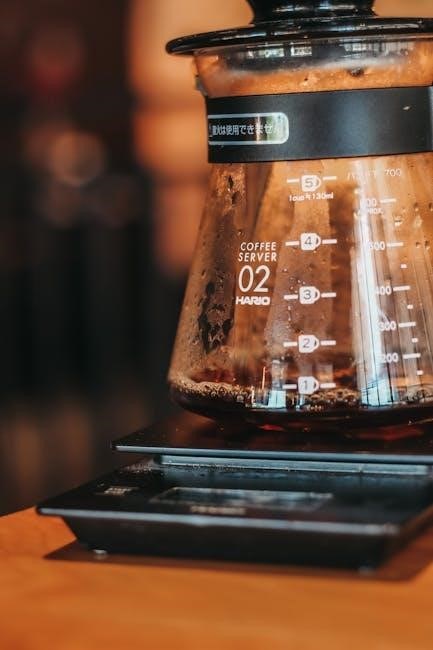
The quality of your water profoundly impacts the final flavor of your pour over coffee․ Filtered water is absolutely crucial, as tap water often contains minerals and chlorine that can negatively affect the taste․ Using filtered water allows the delicate nuances of your coffee beans to shine through, unmasked by unwanted impurities․
Equally important is water temperature․ The optimal range for pour over brewing is 195-205°F (90-96°C)․ Water that is too cool will result in under-extraction, leading to a sour and weak brew․ Conversely, water that is too hot can cause over-extraction, resulting in a bitter and harsh taste․
Precise temperature control is key to achieving a perfectly balanced and flavorful pour over․
Filtered Water is Crucial
Utilizing filtered water is not merely a suggestion, but a fundamental requirement for exceptional pour over coffee․ Tap water, despite appearing clean, frequently harbors dissolved minerals, chlorine, and other impurities that can significantly detract from the coffee’s inherent flavors․ These elements interfere with the extraction process, masking the delicate aromatic compounds and resulting in a muted, or even unpleasant, taste․
Investing in a quality water filter – whether a simple pitcher filter, a faucet-mounted filter, or a whole-house filtration system – is a small price to pay for a dramatically improved coffee experience․ Filtered water allows the true character of your chosen beans to emerge, providing a cleaner, brighter, and more nuanced cup․
Don’t underestimate this step; it’s foundational to pour over success!
Optimal Water Temperature (195-205°F / 90-96°C)
Achieving the correct water temperature is paramount for optimal coffee extraction during the pour over process․ Water that is too cool will result in under-extraction, leading to a sour and underdeveloped flavor profile․ Conversely, water that is too hot can scorch the coffee grounds, producing a bitter and harsh taste․
The sweet spot lies within the range of 195-205°F (90-96°C)․ A gooseneck kettle with temperature control is highly recommended for precision․ If you don’t have a temperature-controlled kettle, bring the water to a boil and then let it sit for approximately 30-60 seconds before pouring․
This brief cooling period will bring the temperature into the ideal range, ensuring a balanced and flavorful cup of pour over coffee․ Consistency is key!
The Pour Over Brewing Process ‒ Step-by-Step
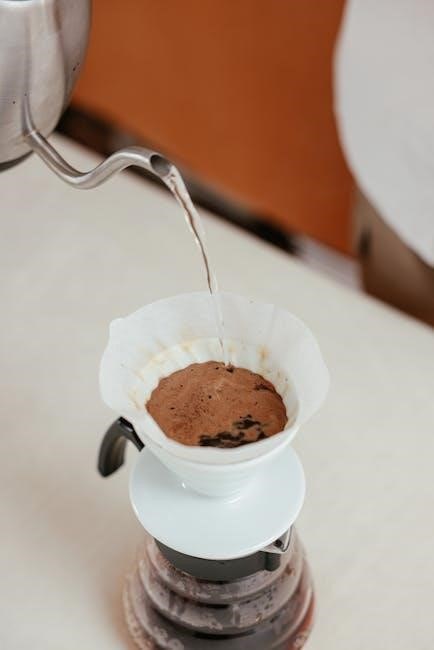
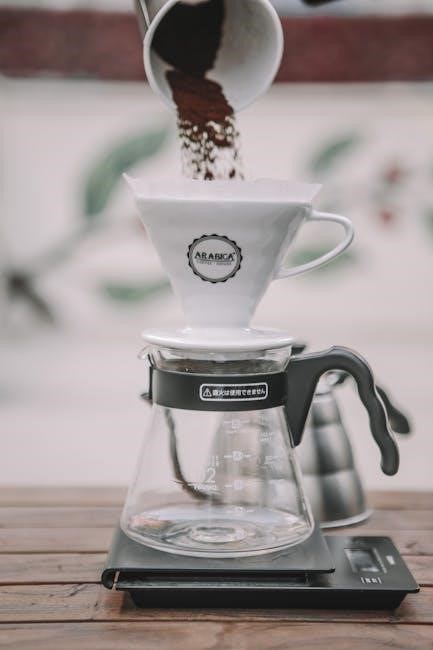
Let’s begin the art of pour over brewing! First, rinse the paper filter thoroughly with hot water to eliminate any papery taste and preheat the dripper and vessel․ Discard the rinse water․ Add your freshly ground coffee to the filter, ensuring a level bed․
Initiate the “bloom” by gently pouring twice the amount of water as coffee grounds over them, saturating evenly․ Allow this to sit for 30-45 seconds, releasing trapped CO2․ Then, slowly and steadily pour the remaining water in a circular motion, maintaining a consistent water level․
Avoid pouring directly onto the filter․ The entire brewing process should take around 2-3 minutes․ Enjoy the aromatic experience and the resulting flavorful cup!
Rinsing the Filter
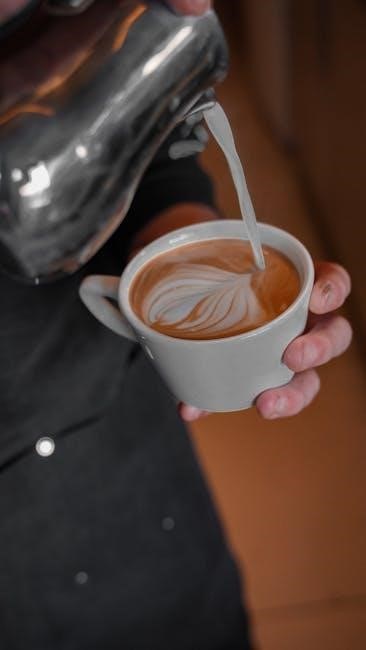
The often-overlooked, yet crucial, step: rinsing your filter! Before adding coffee grounds, thoroughly saturate the paper filter with hot water․ This simple act serves a dual purpose․ Firstly, it eliminates any papery taste that could negatively impact the final brew’s flavor profile, ensuring a clean and pure coffee experience․
Secondly, rinsing preheats both the pour over dripper and the vessel you’re brewing into․ This temperature stability is vital for consistent extraction․ Discard the rinse water completely before proceeding to the next step․
Don’t skip this step – it’s a small effort that yields significant improvements in your pour over coffee’s overall quality and taste!
Blooming the Coffee (30-45 Seconds)
Initiate the bloom – a vital stage for optimal flavor! After rinsing the filter, add your freshly ground coffee to the dripper․ Gently pour roughly twice the amount of water as coffee grounds over the bed, ensuring all grounds are saturated․ For example, if you’re using 20 grams of coffee, pour approximately 40 grams of water․
Allow the coffee to “bloom” for 30-45 seconds․ This process releases trapped carbon dioxide, a natural byproduct of the roasting process․ Observing the bloom – the bubbling and expansion – indicates freshness․
Proper blooming allows for more even extraction during the main pour, resulting in a more balanced and flavorful cup of coffee․ Don’t rush this step; patience is key!
The Main Pour (Slow & Steady)
Begin the main pour with deliberate precision! After the bloom, slowly and steadily pour the remaining water over the coffee grounds in a circular motion, working from the center outwards․ Maintain a consistent water level, avoiding pouring directly onto the filter paper․
The goal is to saturate all the grounds evenly, ensuring consistent extraction․ A gooseneck kettle is incredibly helpful for controlling the flow rate and accuracy of your pour․ Aim for a gentle, controlled stream, not a forceful deluge․
The entire pour should take approximately 2-3 minutes, depending on your grind size and desired strength․ Observe the drawdown – the rate at which the water filters through the grounds – to gauge extraction․
Troubleshooting Common Pour Over Issues
Encountering less-than-perfect results? Don’t despair! Common pour over problems often have simple solutions․ Bitter coffee frequently indicates a grind that is too fine, or water that’s excessively hot, leading to over-extraction․ Adjusting these parameters can dramatically improve the taste․
Conversely, sour coffee usually signals under-extraction․ This could stem from a grind that’s too coarse, insufficient brewing time, or water temperature that’s too low․ Experiment with finer grinds and slightly warmer water․
Remember, consistency is key․ Small adjustments to your technique, grind size, and water temperature can unlock a world of flavor․ Careful observation and experimentation are your allies in achieving pour over perfection!
Bitter Coffee (Grind Size, Water Temperature)
Is your pour over tasting unpleasantly bitter? This is a common issue, but thankfully, often easily rectified․ The primary culprits are typically related to over-extraction – drawing out undesirable compounds from the coffee grounds․ A grind size that is too fine dramatically increases the surface area exposed to the water, accelerating extraction․
Similarly, water that is too hot (above 205°F/96°C) can also lead to over-extraction and bitterness․ Lowering the water temperature slightly, or opting for a coarser grind, can significantly reduce this harshness․
Experiment with these adjustments incrementally, noting the impact on the final cup․ Finding the sweet spot between grind size and water temperature is crucial for a balanced, flavorful brew․
Sour Coffee (Under-Extraction)
Experiencing a sour or acidic taste in your pour over? This usually indicates under-extraction – meaning not enough of the desirable compounds were dissolved from the coffee grounds․ Several factors can contribute to this․ A grind size that’s too coarse reduces the surface area available for extraction, hindering the process․
Insufficient brewing time, or water that’s too cool (below 195°F/90°C), can also lead to under-extraction․ Increasing the water temperature slightly, or opting for a finer grind, can help resolve this issue․
Ensure a thorough saturation of the coffee bed during the bloom and main pour․ Adjusting these variables will unlock the coffee’s full potential, resulting in a more balanced and enjoyable cup․
Pour Over vs․ Other Brewing Methods (Drip, French Press)
How does pour over stack up against other popular brewing methods? Compared to automatic drip coffee makers, pour over offers significantly more control over brewing variables, resulting in a cleaner, more flavorful cup․ Drip machines often sacrifice nuance for convenience․
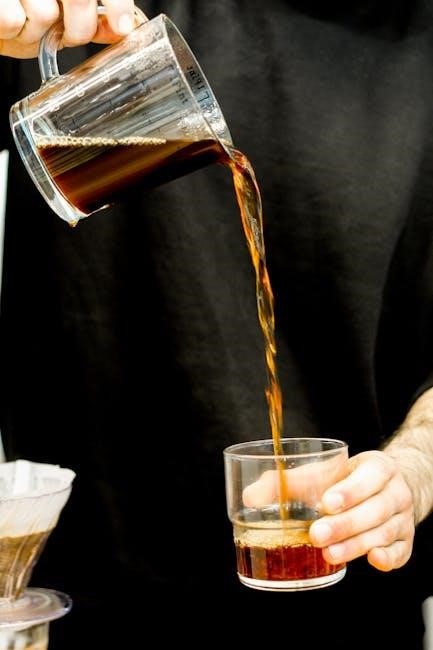
Unlike immersion methods like the French press, where coffee grounds steep directly in water, pour over utilizes a continuous flow of water․ This infusion process is more efficient at extracting coffee solubles, preventing over-saturation and resulting in a less muddy brew;
While French press delivers a full-bodied, sediment-rich experience, pour over emphasizes clarity and highlights the coffee’s delicate flavor profiles․ Each method caters to different preferences, but pour over excels in showcasing coffee’s complexity․