Makita Plunge Saw Guide Rail: A Comprehensive Guide
This comprehensive guide explores Makita plunge saw guide rails, detailing their types, compatibility, benefits, and applications for woodworking professionals and enthusiasts alike.
Makita plunge saw guide rails represent a significant advancement in portable cutting technology, offering precision typically associated with stationary table saws. These rails, designed for use with Makita’s SP6000, XPS01, and XPS02 plunge saws, transform these tools into highly accurate ripping and crosscutting solutions.
The system’s core benefit lies in its ability to deliver consistently straight cuts, especially when working with sheet materials. Unlike traditional circular saws, the guide rail ensures the saw base remains locked in a linear path, eliminating wandering and providing professional-quality results. This makes them invaluable for carpenters, cabinet makers, and DIY enthusiasts seeking portability without compromising accuracy.
What is a Makita Plunge Saw Guide Rail?
A Makita plunge saw guide rail, like the 199140-0 model, is a precision-engineered track designed to work in conjunction with Makita plunge circular saws. It’s a long, flat, and rigid piece, typically constructed from aluminum, featuring an anti-slip coating on the underside to prevent movement during operation.
The rail interacts directly with the saw’s base; the saw slides along the rail, guided by its edges. This ensures a perfectly straight cut path. Crucially, the rail allows for “plunge” cuts – starting a cut in the middle of a workpiece – a feature not easily achievable with standard circular saws. It’s a portable alternative to a table saw for ripping sheet goods.
Benefits of Using a Guide Rail System
Employing a Makita plunge saw guide rail system delivers unparalleled precision and efficiency. Users experience remarkably straight, splinter-free cuts, rivaling those achieved with stationary table saws, but with increased portability. The system simplifies ripping sheet materials, offering a safer and more controlled alternative to freehand cutting.
Furthermore, the guide rail facilitates accurate bevel cuts and allows for plunge cuts – initiating cuts within a workpiece – expanding project possibilities. Reduced material waste and improved cut quality contribute to professional-looking results, making it invaluable for both professionals and DIY enthusiasts.

Compatibility and Models
Makita guide rails are primarily designed for SP6000, XPS01, and XPS02 plunge saws, but adapters expand compatibility to jigsaws and routers.
Compatible Makita Plunge Saw Models (SP6000, XPS01, XPS02)
Makita’s plunge saw guide rail system demonstrates exceptional compatibility with several of their flagship plunge saw models. The SP6000 series is a cornerstone, designed to interact seamlessly with the rail for precise cuts. Furthermore, the XPS01 and XPS02 models also connect directly, delivering smooth, straight, or beveled results.
These saws feature a base that engages directly with the guide rail, eliminating wobble and ensuring accuracy. It’s important to note that the guide rail is specifically engineered for these 6-1/2 inch plunge circular saws, maximizing performance and safety. Utilizing other saw models requires appropriate adapters.
Guide Rail Length Options and Selection
Makita guide rails are available in various lengths to accommodate diverse project needs. Common options include 39-3/8 inch (1000mm) and 55-1/8 inch (1400mm) rails, providing flexibility for different sheet material sizes and cut lengths. Selecting the appropriate length is crucial for efficiency and accuracy.
For smaller projects or portability, the shorter rail is ideal. Larger sheet goods necessitate the longer rail, or the ability to join multiple rails. Consider the typical materials you’ll be cutting and the space available when making your selection. Longer rails offer greater stability for extended cuts.
Adapters for Other Tools (Jigsaws, Routers)
Makita guide rails aren’t limited to plunge saws; adapters expand their utility to other tools. Specifically, adapters allow for precise cutting with jigsaws and routers, leveraging the rail’s straight-line guidance. These adapters securely attach the tool base to the guide rail, ensuring smooth and accurate cuts.
Using a jigsaw with the rail is excellent for curved cuts requiring a starting or ending point on a straight line. Router adapters enable edge profiling and dado cuts with exceptional precision. Investing in these adapters significantly increases the versatility of your Makita guide rail system.

Features of Makita Guide Rails
Makita guide rails boast an anti-slip coating, bevel cutting capabilities, and connector options – including alternatives to Makita connectors – for enhanced precision.
Anti-Slip Coating for Secure Grip
The integrated anti-slip coating on Makita guide rails is a crucial feature, ensuring the rail remains firmly planted during operation. This prevents unwanted movement and guarantees consistently straight and accurate cuts, even during demanding ripping tasks. The coating creates significant friction between the rail and the workpiece, minimizing shifting that can compromise cut quality.
This secure grip is particularly important when plunge cutting, where stability is paramount. Without it, the saw could potentially “grab” and cause damage to both the rail and the material. Makita’s attention to this detail significantly enhances user control and safety, contributing to professional-level results.
Guide Rail Connector Options (Makita vs. TSO)
When joining multiple rails for extended cuts, connectors are essential. Makita offers its own connector bars, but users often explore alternatives like TSO’s Self-Aligning Guide Rail Connectors. While Makita’s connectors function adequately, TSO connectors are praised for their self-aligning feature, eliminating the need for meticulous straightness checks during rail assembly.
This simplifies the process and saves time, particularly for long, continuous cuts. Users report a more seamless experience with TSO connectors, reducing the risk of misalignment and ensuring a consistently straight cutting path. Choosing between the two depends on budget and desired convenience.
Bevel Cutting Capabilities with the Guide Rail
Makita’s guide rail system isn’t limited to straight, 90-degree cuts; it excels at bevel cuts too. The plunge saw base connects directly to the guide rail, allowing for smooth and accurate angled cuts. This feature is invaluable for projects requiring precise miters or angled edges, offering a level of control often exceeding traditional circular saws.
The system’s design maintains stability during bevel operations, ensuring clean and consistent results. Compatibility extends to Makita models XPS01, XPS02, and SP6000J, making it a versatile tool for various woodworking applications demanding angled precision.
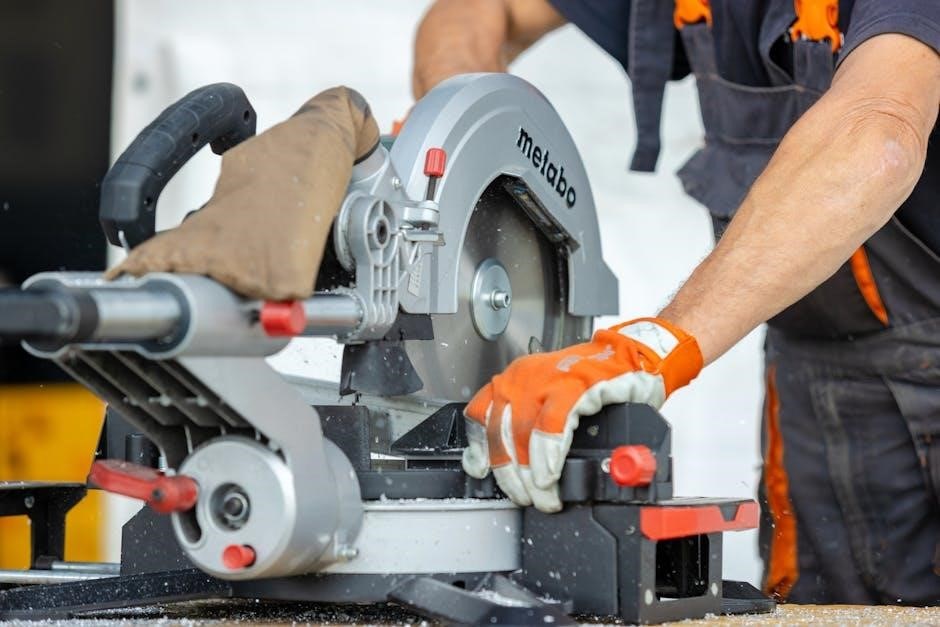
Using the Guide Rail System
Proper setup and alignment are crucial for optimal results with a Makita plunge saw and guide rail, ensuring smooth, straight, and accurate cuts every time.
Proper Setup and Alignment Techniques
Achieving precise cuts with your Makita plunge saw and guide rail begins with meticulous setup. First, ensure your work surface is stable and clear of debris. Position the guide rail firmly, utilizing the anti-slip coating to prevent movement during operation.
Carefully align the rail with your desired cut line, double-checking for accuracy. The saw base connects directly to the rail, so proper alignment here is paramount. Before plunging, perform a test run without the blade engaged to verify the setup.
Remember, a slightly misaligned rail can ruin an entire sheet of material, so take your time and prioritize accuracy during this initial phase. Consistent checks are key!
Plunge Cutting Techniques: Avoiding Rail Damage
Plunge cutting with a Makita plunge saw requires a specific technique to protect both the tool and the guide rail. Crucially, ensure the blade is at full speed before initiating the plunge. A slow, controlled descent minimizes grabbing and potential rail damage.
Avoid forcing the saw; let the blade do the work. If resistance is encountered, stop immediately and reassess. Never attempt to plunge through excessively thick material in a single pass. Multiple, shallower passes are safer and yield cleaner results;
Remember, a sudden grab can tear up the rail, so smooth, deliberate movements are essential for longevity and precision.
Ripping Sheet Materials with Precision
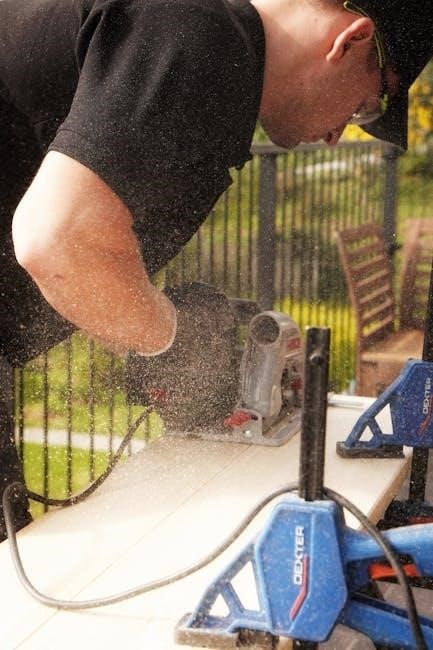
Makita plunge saw guide rails transform ripping sheet materials into a remarkably precise process, offering a portable alternative to a table saw. The interaction between the rail and saw base delivers consistently straight cuts, eliminating tear-out and ensuring clean edges.
Secure the guide rail firmly to the sheet material before starting the cut. Maintain a consistent, moderate feed rate, allowing the blade to efficiently remove material. For longer rips, consider utilizing rail connectors for extended reach and stability.
This system provides professional-quality results with enhanced safety and portability.
Accessories and Add-ons
Enhance your Makita plunge saw system with connector bars, carry cases for portability, and readily available replacement parts like anti-slip strips.
Guide Rail Connector Bars
Connector bars are essential for extending the cutting capacity of your Makita guide rail system when working with larger sheet goods. Makita offers its own branded connector bars, but users frequently recommend alternatives like TSO Self-Aligning Guide Rail Connectors.
These TSO connectors eliminate the need for meticulous alignment checks when joining rails, providing a seamless and perfectly straight cutting surface. Traditional connectors require careful adjustment to avoid uneven cuts, making the self-aligning feature a significant time-saver and accuracy booster for professional woodworkers and serious DIY enthusiasts.
Carry Cases and Storage Solutions
Protecting your investment in a Makita plunge saw guide rail system requires appropriate storage and transport solutions. Dedicated carry cases are available, designed to house the guide rail, saw, and essential accessories like connector bars and adapters.
These cases often feature a robust construction to withstand the rigors of job site transport and prevent damage to the delicate anti-slip strips on the rail. Proper storage also minimizes the risk of warping, ensuring the rail remains perfectly straight for accurate cuts. Consider a case with dedicated compartments for organized storage.
Replacement Parts (e.g., Anti-Slip Strips)
Maintaining optimal performance of your Makita plunge saw guide rail often necessitates replacing worn components. The anti-slip strips along the underside of the rail are particularly susceptible to wear and tear with frequent use. Replacements are readily available, ensuring continued secure grip and preventing unwanted movement during cuts.
Connector bars can also experience wear, and replacements guarantee tight, accurate rail joins. Regularly inspecting these parts and proactively replacing them extends the lifespan and precision of your entire guide rail system, saving you money in the long run.

Maintenance and Care
Regular cleaning, damage inspection, and proper storage are crucial for preserving the accuracy and longevity of your Makita plunge saw guide rail system.
Cleaning the Guide Rail
Maintaining a clean guide rail is paramount for smooth and accurate cuts. After each use, or regularly during extended projects, wipe down the rail’s surface with a soft, dry cloth to remove sawdust and debris. Avoid using harsh chemicals or abrasive cleaners, as these can damage the anti-slip coating and the rail’s overall finish.
For stubborn residue, a slightly damp cloth can be used, followed immediately by a dry wipe. Pay particular attention to the edges of the rail where dust tends to accumulate. Regularly inspect and clean the anti-slip strips to ensure optimal grip during operation, preserving the rail’s performance and extending its lifespan.
Inspecting for Damage
Regular inspection is crucial for identifying potential issues before they impact cutting accuracy or safety. Carefully examine the guide rail for any signs of warping, cracks, or dents, especially after heavy use or improper storage. Pay close attention to the anti-slip strips, ensuring they are securely attached and haven’t become worn or detached.
Check the rail’s surface for any embedded debris that could interfere with the saw’s smooth travel. If damage is detected, discontinue use and consider replacing the rail or contacting Makita for repair options to maintain optimal performance and prevent accidents.
Proper Storage to Prevent Warping
To maintain the guide rail’s straightness and longevity, proper storage is essential. Avoid storing the rail flat on the floor or leaning against walls, as this can contribute to warping over time. Ideally, store the rail horizontally, supported along its entire length, within a dedicated carry case or on a flat, stable surface.
Protect it from extreme temperatures and humidity fluctuations, which can also cause deformation. Consistent, careful storage will ensure the rail remains accurate and reliable for years of precise cutting performance.

Troubleshooting Common Issues
Common problems include rails not staying secure or saw bases failing to engage properly; achieving perfectly straight cuts requires careful alignment and technique.
Rail Not Staying Secure
A frequent issue users encounter is the guide rail losing its grip on the workpiece during a cut. This often stems from insufficient clamping force or a dirty rail surface. Ensure the anti-slip strips on the underside of the rail are clean and free of debris, as these are crucial for maintaining traction.
Consider using additional clamps, especially when ripping larger sheet materials. Furthermore, investigate aftermarket connectors like TSO Self-Aligning Guide Rail Connectors, as they can provide a more stable connection when joining multiple rails, minimizing movement and slippage during operation. Regularly inspect the rail for any damage to the anti-slip coating.

Saw Base Not Engaging Properly
If the Makita plunge saw base isn’t smoothly connecting to the guide rail, a common culprit is accumulated dust and debris within the rail’s channel or on the saw’s base plate. Thoroughly clean both surfaces with a brush or vacuum to ensure a flush fit.
Inspect the rail for any bends or warping, which can impede proper engagement. Also, verify that the locking mechanism on the saw base is functioning correctly. Sometimes, a slight adjustment of the base plate’s screws can resolve minor alignment issues, allowing for smooth and accurate tracking along the rail.
Achieving Perfectly Straight Cuts
To guarantee perfectly straight cuts with your Makita plunge saw and guide rail, ensure the rail is firmly secured and level on the workpiece. Prior to cutting, double-check the saw base is fully engaged within the rail, and the locking mechanism is properly fastened.
Consider utilizing TSO Self-Aligning Guide Rail Connectors when joining rails for extended cuts, eliminating potential misalignment. Maintain a consistent cutting speed and avoid applying excessive pressure, allowing the rail to guide the saw effortlessly for pristine results.
Advanced Techniques
Mastering advanced techniques involves joining rails for longer cuts and utilizing the guide rail system to precisely execute angled cuts with confidence.
Joining Multiple Rails for Longer Cuts
Extending cutting capacity beyond a single rail length is often necessary when working with large sheet goods. While Makita offers connector bars, users frequently recommend alternatives like TSO Self-Aligning Guide Rail Connectors.
These connectors eliminate the need for meticulous alignment checks when joining rails, ensuring a perfectly straight cut across multiple sections. Traditional connector bars require careful attention to maintain a seamless transition, potentially leading to inaccuracies.
The TSO connectors provide a self-aligning feature, simplifying the process and improving overall cut quality. This is particularly beneficial for long, uninterrupted cuts where precision is paramount.
Cutting Angles with the Guide Rail System
Makita’s guide rail system facilitates accurate angled cuts, expanding its versatility beyond simple rip cuts. The plunge saw base directly connects to the guide rail, enabling smooth and precise bevel cuts when adjusted accordingly.
By utilizing the saw’s bevel adjustment feature in conjunction with the guide rail, users can achieve consistent angles for projects requiring mitered edges or angled panels.
Proper setup and secure clamping of the rail are crucial for maintaining accuracy during angled cuts. The system’s inherent stability minimizes drift, resulting in clean, professional-looking results.
Safety Considerations
Prioritize safe plunge cutting by ensuring the blade is fully extended before initiating the cut, preventing grabbing and potential rail damage during operation.
Safe Plunge Cutting Practices
Plunge cutting with a Makita plunge saw and guide rail demands meticulous attention to safety. Always ensure the blade is running at full speed before initiating the plunge. A slow, controlled descent minimizes the risk of the saw grabbing the material and potentially damaging the guide rail.
Maintain a firm grip on the saw and guide rail throughout the cut. Never force the saw; let the blade do the work. Be acutely aware of your surroundings and ensure no obstructions are in the cutting path. Proper technique prevents kickback and ensures clean, accurate cuts while safeguarding both the operator and the equipment.
Proper Use of Safety Equipment
When operating a Makita plunge saw with a guide rail, prioritizing safety equipment is paramount. Always wear safety glasses or a face shield to protect against flying debris. Hearing protection is crucial due to the saw’s high noise level. A dust mask or respirator safeguards against harmful wood dust inhalation.
Consider wearing work gloves for enhanced grip and protection. Appropriate footwear provides stability. Ensure your clothing is snug-fitting and avoids loose elements that could become entangled in the saw. A clear workspace, free from distractions, further contributes to a safe working environment.