Dassault Rafale guides detail capabilities, including the MICA missile, and recent combat engagements, offering comprehensive specifications in readily available PDF formats.
Rafale Overview
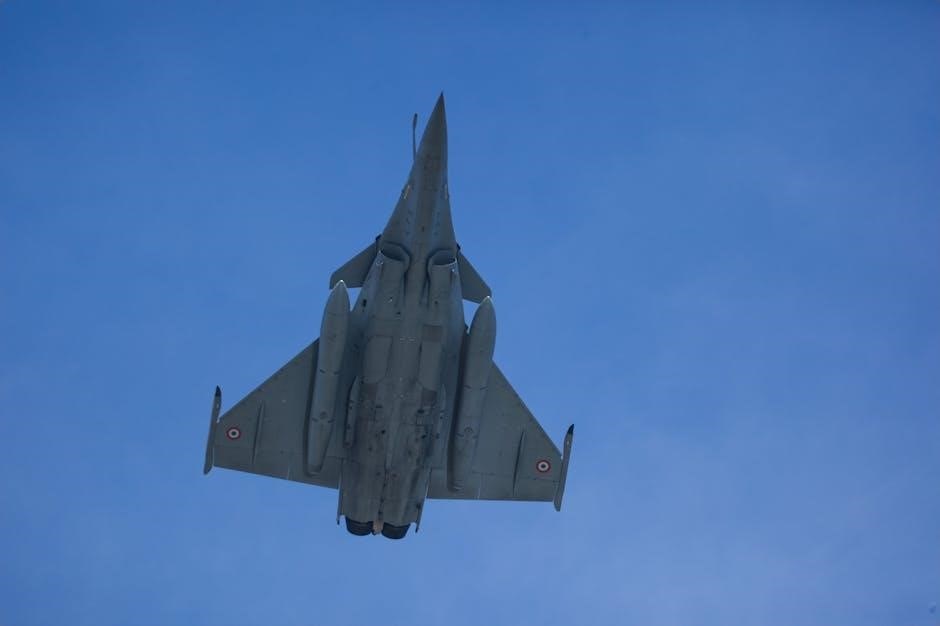
The Dassault Rafale is a French twin-engine, multirole fighter aircraft designed and manufactured by Dassault Aviation. Numerous resources, often available as PDF documents, comprehensively detail its advanced capabilities. These guides showcase the Rafale’s versatility, excelling in air superiority, interdiction, aerial reconnaissance, and nuclear deterrence roles.
Information found in these PDFs highlights the aircraft’s delta-wing and canard configuration, contributing to exceptional maneuverability. The Rafale stands out for its ability to supercruise – maintaining supersonic flight without afterburners – a feature enabled by its powerful engines. Detailed specifications, often presented in tabular format within these guides, cover dimensions, weight, and performance characteristics. Combat engagements, like its recent first combat experience, are also documented, illustrating its operational effectiveness. Accessing these PDF resources provides a thorough understanding of this sophisticated fighter jet.
Historical Development
The Dassault Rafale’s development began in the early 1970s, initially as a lower-cost alternative to the more ambitious FX program. Detailed historical accounts, often compiled in PDF format, trace its evolution through numerous prototypes and testing phases. These documents reveal a commitment to continuous improvement and adaptation to evolving operational requirements.
Early PDF reports outline the challenges faced in integrating advanced technologies, including its sophisticated avionics and multirole capabilities. The program experienced delays and changes in specifications, but ultimately resulted in a highly capable aircraft. Information within these historical PDFs highlights key milestones, such as the first flight in 1986 and its entry into service in 1996. Examining these resources provides a comprehensive understanding of the Rafale’s long and complex journey from concept to operational reality, showcasing Dassault’s dedication to innovation.
Role and Purpose
The Dassault Rafale is designed as a versatile, multirole combat aircraft, capable of undertaking a wide spectrum of missions. Detailed PDF guides illustrate its proficiency in air superiority, ground attack, reconnaissance, and nuclear deterrence. Its primary purpose is to provide France, and increasingly, other nations, with a potent and independent air power capability.
PDF documentation emphasizes the Rafale’s ability to operate from both aircraft carriers (Rafale M) and land-based airfields. This adaptability, coupled with its advanced weaponry, makes it a crucial asset in modern warfare. Analysis within these PDF resources highlights its role in recent conflicts, demonstrating its effectiveness in both air-to-air and air-to-ground engagements. The Rafale’s design prioritizes survivability and operational flexibility, ensuring it can fulfill diverse roles in complex and evolving threat environments, as detailed in official reports.
Rafale Versions
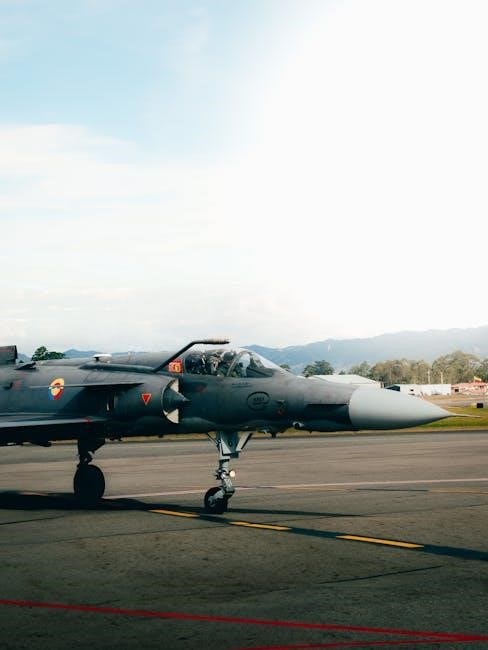
PDF documentation details various Rafale iterations – A, B, C, and M – each tailored for specific operational requirements and deployment scenarios, offering unique capabilities.
Rafale A
Rafale A, the initial single-seat land-based version, served as the foundational platform for subsequent developments, extensively documented in available PDF guides. These resources detail its primary role in ground attack and reconnaissance missions for the French Air and Space Force. The PDF specifications highlight a focus on agility and advanced avionics, enabling precision strikes and effective battlefield awareness.
Early operational experience with the Rafale A informed design refinements implemented in later variants. PDF analyses showcase its capabilities with a diverse range of weaponry, including air-to-ground missiles and precision-guided bombs. While superseded by more advanced models, the Rafale A remains a significant milestone in French military aviation history, thoroughly covered in technical documentation and operational reports accessible in PDF format.
Rafale B
The Rafale B is the two-seat variant, designed for training and operational flexibility, with detailed specifications readily available in comprehensive PDF documentation. These PDF guides emphasize its expanded capabilities, including a backseat weapons systems officer (WSO) to enhance mission effectiveness. The Rafale B shares many characteristics with the Rafale A, but the addition of the second crew member significantly improves workload management and situational awareness.
PDF reports illustrate the Rafale B’s role in both air-to-air and air-to-ground missions, offering a versatile platform for diverse operational requirements. Technical PDFs outline the integration of advanced avionics and weapon systems, ensuring compatibility with the latest technologies. The dual-seat configuration makes it ideal for complex missions and pilot training, as thoroughly explained within the accessible PDF resources.
Rafale C
The Rafale C is the navalized variant, specifically designed for carrier operations, with detailed specifications comprehensively documented in available PDF guides. These PDF resources highlight its reinforced structure and folding wings, crucial for adapting to the demanding environment of aircraft carriers. The Rafale C maintains the multirole capabilities of other variants, excelling in both air defense and strike missions, as detailed in technical PDF reports.
PDF documentation showcases the integration of specialized equipment for maritime operations, including arrestor hooks and strengthened landing gear. The Rafale C’s weapon systems and avionics are also outlined in these PDFs, demonstrating its ability to effectively engage both air and surface targets. Its robust design and advanced capabilities make it a cornerstone of French naval aviation, thoroughly explained within the accessible PDF materials.
Rafale M
The Rafale M, a maritime variant, is extensively covered in detailed PDF documentation outlining its unique adaptations for carrier operations. These PDF guides emphasize the strengthened structure and folding wing design, essential for the confined spaces of an aircraft carrier. The Rafale M’s multirole capabilities – air defense, reconnaissance, and strike – are thoroughly detailed within these accessible PDF resources.
PDF specifications highlight the inclusion of a robust arrestor hook and reinforced landing gear, critical for safe carrier landings. Weapon systems, including the MICA missile with its Beyond Visual Range (BVR) capabilities exceeding 100km, are comprehensively described in the PDFs. The Rafale M represents a significant advancement in naval aviation technology, with all key features and performance data readily available in these informative PDF documents.
Technical Specifications
PDF documents comprehensively detail the Rafale’s dimensions, weight, and engine performance, providing precise data for understanding this advanced fighter aircraft’s capabilities.
Dimensions
Detailed PDF resources showcase the Rafale’s precise physical characteristics, crucial for understanding its operational envelope and logistical requirements. The aircraft boasts a length of 15.27 meters (50.1 feet), providing ample space for advanced systems and weaponry. Its wingspan measures 10.80 meters (35.4 feet), contributing to exceptional maneuverability and lift generation.
The Rafale’s height is 5.34 meters (17.5 feet), allowing for compatibility with standard aircraft maintenance facilities. A significant aspect of its design is the wing area, spanning 45.7 square meters (492 square feet), which optimizes aerodynamic performance across a wide range of flight conditions. These dimensions, readily available in technical PDF guides, are fundamental to the Rafale’s overall effectiveness as a multirole combat aircraft.
Length
Technical PDF documentation consistently specifies the Dassault Rafale’s overall length as 15.27 meters, equivalent to 50.1 feet. This measurement is a foundational element in understanding the aircraft’s logistical footprint, impacting hangar compatibility and transport requirements. The length directly influences the aircraft’s aerodynamic properties, contributing to its stability and maneuverability during flight operations.
Detailed schematics within these PDF guides illustrate how this length accommodates the sophisticated avionics suite, powerful engines, and diverse weapon payload. The precise length is also critical for calculating approach and landing distances, ensuring safe operation from various airfields. Understanding the Rafale’s length, as detailed in official PDF specifications, is essential for pilots, maintenance crews, and logistical planners alike.
Wingspan
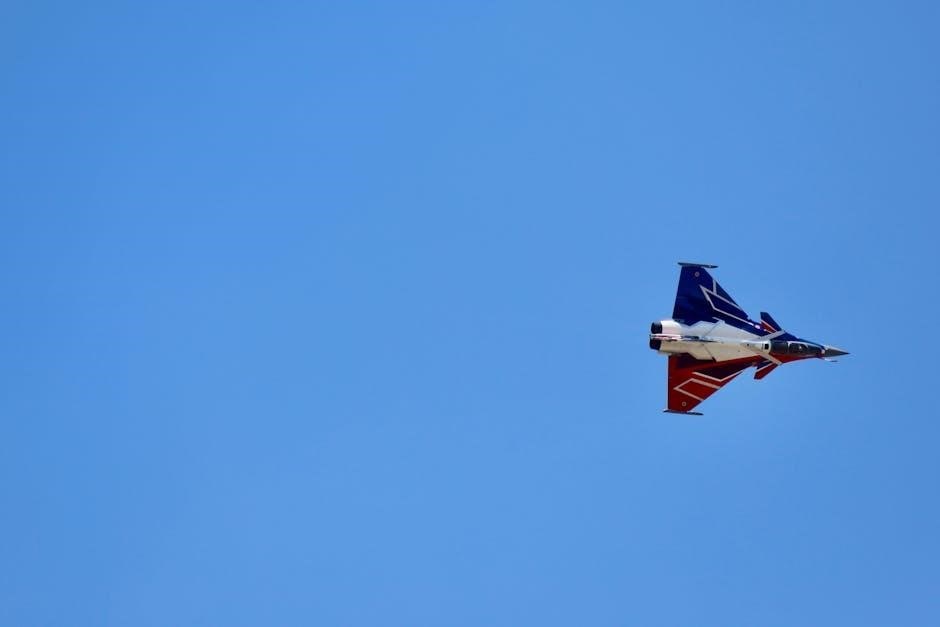
According to official PDF specifications and technical data sheets, the Dassault Rafale boasts a wingspan of 10.80 meters, which translates to 35.4 feet. This dimension is crucial for assessing the aircraft’s handling characteristics and lift generation capabilities, as detailed within comprehensive aircraft guides available in PDF format. The wingspan directly impacts the Rafale’s ability to perform agile maneuvers and maintain stability during various flight regimes.
PDF documentation highlights how the wingspan, combined with the delta wing design, contributes to the aircraft’s exceptional performance. It also influences the aircraft’s roll rate and responsiveness to control inputs. Understanding the wingspan is vital for ground handling, storage, and operational planning, as outlined in the detailed PDF manuals provided by Dassault Aviation.
Height
Detailed PDF documents concerning the Dassault Rafale consistently state its overall height as 5.34 meters, equivalent to 17.5 feet. This vertical dimension is a key factor in hangar compatibility and aircraft transport logistics, as thoroughly explained in the official maintenance PDF guides. The height, when combined with the wingspan and length, defines the aircraft’s overall volumetric footprint;
Technical specifications found within various PDF reports emphasize that the Rafale’s height contributes to its aerodynamic profile and stability. It influences the aircraft’s center of gravity and its susceptibility to wind effects. Operational manuals, available as PDF downloads, provide precise height measurements for pre-flight checks and ground servicing procedures, ensuring safe and efficient operation.
Wing Area
PDF documentation detailing the Dassault Rafale consistently specifies a wing area of 45.7 square meters, which translates to 492 square feet. This measurement, crucial for aerodynamic calculations, is prominently featured in performance analysis PDFs and technical manuals. The wing area directly impacts lift generation, drag characteristics, and overall flight maneuverability, as detailed in engineering reports available in PDF format.
Analysis within these PDF resources highlights how the Rafale’s wing area contributes to its exceptional agility and stability across a wide range of flight regimes. Operational handbooks, often distributed as PDF files, provide pilots with a clear understanding of how wing area influences control surface effectiveness and stall characteristics. Precise wing area data is also vital for load calculations and structural integrity assessments, documented extensively in maintenance PDFs.
Weight
PDF documents concerning the Dassault Rafale consistently outline weight specifications crucial for performance evaluation. Available technical data PDFs detail the empty weight, varying between approximately 9,850 kilograms for the Rafale B and 10,300 kilograms for other variants. These PDFs also specify the maximum takeoff weight, a critical parameter for mission planning and runway requirements.
Detailed weight breakdowns, often found within maintenance and operational PDF guides, illustrate how different configurations and payload affect the overall weight. These PDF resources emphasize the importance of weight management for optimizing range, speed, and maneuverability. Engineering analysis PDFs further explain how weight distribution impacts stability and control. Accessing these PDFs provides a comprehensive understanding of the Rafale’s weight characteristics and their implications for flight operations.
Empty Weight
PDF documentation regarding the Dassault Rafale consistently cites the empty weight as a fundamental performance indicator. Technical specifications, readily available in PDF format, detail the Rafale B variant’s empty weight at approximately 9,850 kilograms (22,700 lb). Other variants, as outlined in operational PDF guides, typically exhibit an empty weight around 10,300 kilograms.
These PDF resources emphasize that the empty weight represents the aircraft’s mass without fuel, ordnance, or crew. Detailed engineering PDFs explain how minimizing empty weight contributes to improved payload capacity and range. Maintenance manuals in PDF form also reference empty weight during weighing procedures. Accessing these PDFs provides precise data for calculating performance parameters and ensuring operational safety.
Maximum Takeoff Weight
PDF documents detailing the Dassault Rafale’s capabilities consistently highlight its substantial maximum takeoff weight (MTOW). Operational manuals, available in PDF format, specify that the Rafale’s MTOW varies depending on the specific configuration and operational requirements. Generally, the MTOW is significantly higher than the empty weight, allowing for a substantial payload of fuel and weaponry.
Technical PDFs indicate that the maximum takeoff weight can exceed 24,000 kilograms. These PDF resources emphasize that exceeding the MTOW compromises flight safety and performance. Pilot operating handbooks, distributed as PDFs, provide detailed guidance on adhering to weight limitations. Accessing these PDFs is crucial for understanding the aircraft’s operational envelope and ensuring safe flight operations.
Engine Specifications
PDF guides reveal the Rafale utilizes twin M88-2 engines, each delivering up to 50 kN dry thrust and 75 kN with afterburners.
M88-2 Engine Overview
PDF documentation comprehensively details the M88-2, a highly advanced turbofan engine specifically designed for the Dassault Rafale fighter aircraft. Developed by Snecma (now Safran Aircraft Engines), this engine is central to the Rafale’s exceptional performance characteristics. It’s a double-flow, converging-diverging cycle engine, incorporating advanced materials and technologies to maximize thrust and efficiency.
The M88-2 is notable for its modular design, facilitating easier maintenance and upgrades. PDF guides highlight its sophisticated digital control system, which optimizes engine operation across a wide range of flight conditions. This engine’s design allows the Rafale to achieve supercruise – sustained supersonic flight without the use of afterburners – a significant tactical advantage. Detailed schematics and performance data are often included within these PDF resources, providing in-depth insight into its complex engineering.
Thrust Capabilities
PDF specifications readily available online detail the impressive thrust capabilities of the Rafale’s M88-2 engines. In its standard, dry thrust configuration, each engine produces approximately 50 kilonewtons (11,000 pounds-force), providing efficient power for sustained flight. However, when utilizing afterburners, the M88-2 significantly increases output, reaching up to 75 kilonewtons (17,000 pounds-force).
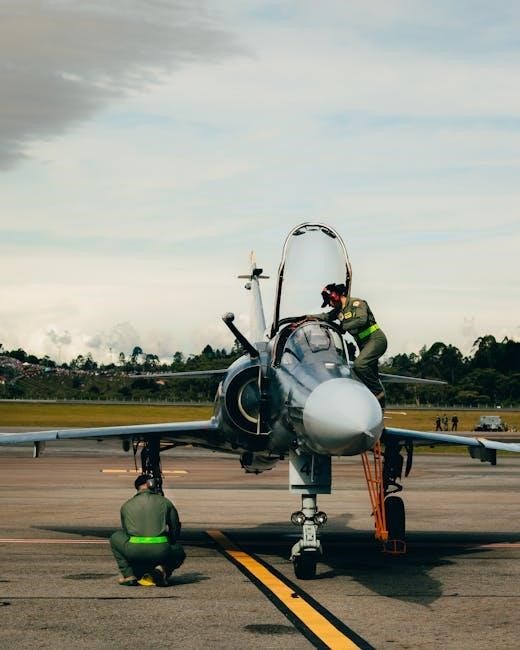
These PDF documents emphasize that this substantial thrust allows the Rafale to achieve exceptional acceleration and climb rates. The ability to generate high thrust, coupled with the engine’s supercruise capability, is a key factor in the aircraft’s combat effectiveness. Performance charts within the PDF guides illustrate the engine’s thrust output across various altitudes and speeds, providing a comprehensive understanding of its operational envelope. This data is crucial for pilots and engineers alike.
Dry Thrust
PDF documentation concerning the Dassault Rafale consistently highlights a dry thrust output of 50 kilonewtons (approximately 11,000 pounds-force) per M88-2 engine. This figure represents the engine’s power output during normal, unaugmented flight, crucial for efficient cruising and operational maneuvers. Detailed engine diagrams within these PDF guides illustrate the airflow and combustion processes contributing to this level of thrust.
The PDF specifications emphasize that the Rafale’s dry thrust is sufficient for sustained high-speed flight without relying on afterburners, conserving fuel and extending range. This capability is particularly valuable during long-duration missions. Analysis presented in the PDF reports demonstrates how the dry thrust performance impacts the aircraft’s overall efficiency and operational flexibility, making it a cornerstone of the Rafale’s design.
Thrust with Afterburners
Dassault Rafale technical PDF documents detail that each M88-2 engine, when utilizing afterburners, achieves a substantial thrust increase to 75 kilonewtons (roughly 17,000 pounds-force). These PDF guides illustrate the afterburner system’s function – injecting fuel directly into the exhaust stream – to dramatically boost power for rapid acceleration and enhanced maneuverability.
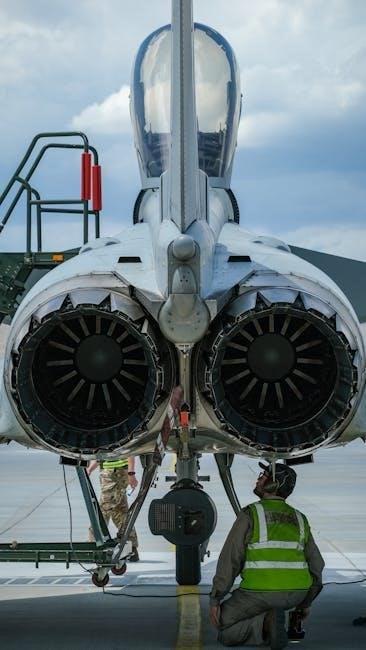
The PDF specifications emphasize this augmented thrust is critical for achieving supercruise capability, allowing the Rafale to sustain supersonic speeds without continuous afterburner use. Performance charts within the PDF reports showcase the impact of afterburner engagement on climb rates and time-to-altitude. Analysis within these documents confirms the afterburner’s role in providing a decisive advantage in air combat scenarios, as detailed in the PDF’s operational assessments.
Engine Performance Characteristics
Dassault Rafale engine performance, as detailed in available PDF documentation, is characterized by its exceptional responsiveness and reliability. These PDF guides highlight the M88-2’s modular design, facilitating ease of maintenance and reducing lifecycle costs. The PDF reports showcase the engine’s ability to operate efficiently across a wide range of altitudes and airspeeds, crucial for diverse mission profiles.
Furthermore, the PDF specifications emphasize the engine’s low noise signature and reduced infrared visibility, enhancing the Rafale’s stealth characteristics. Operational data within the PDFs demonstrates the engine’s robust performance in extreme environmental conditions. Detailed diagrams in the PDFs illustrate the engine’s advanced control systems, contributing to its precise throttle response and overall flight stability, as assessed in the comprehensive PDF analyses.
Armament and Equipment
PDF guides detail the Rafale’s extensive weaponry, including MICA missiles with a BVR range exceeding 100km, and other advanced systems.
Air-to-Air Missiles
PDF documentation comprehensively outlines the Rafale’s air-to-air missile capabilities, prominently featuring the MICA (Missile Interception, Counter-Air) missile system. This advanced missile is a cornerstone of the Rafale’s air superiority role, offering exceptional performance characteristics. Detailed specifications reveal the MICA’s weight at 190 kg and a remarkable Beyond Visual Range (BVR) reach exceeding 100 kilometers, achieving speeds of up to Mach 4.
Comparisons within available PDF guides highlight the MICA’s advantages over competitor missiles, such as the AMRAAM utilized by F-16 aircraft, which possesses a comparatively shorter BVR range of 75 kilometers. The documentation emphasizes the MICA’s versatility, capable of engaging multiple targets simultaneously, and its resistance to electronic countermeasures, solidifying the Rafale’s position as a formidable aerial combatant. These PDF resources provide in-depth analysis of the missile’s guidance systems and operational parameters.
MICA Missile Specifications
PDF reports detailing the Rafale’s weaponry extensively cover the MICA missile’s specifications. The missile boasts a weight of 190 kilograms, designed for optimal aerodynamic performance and maneuverability. Crucially, the MICA achieves a Beyond Visual Range (BVR) capability exceeding 100 kilometers, enabling engagements at significant distances. Its impressive speed reaches Mach 4, allowing for rapid interception of airborne threats.
Available PDF guides further specify the MICA’s guidance system, utilizing both inertial and data-link guidance for enhanced accuracy. The missile is available in two variants: the MICA-IR, employing an infrared homing seeker, and the MICA-RF, utilizing an active radar homing seeker. These PDF documents highlight the missile’s resistance to jamming and countermeasures, ensuring reliable performance in contested environments. Detailed schematics and performance graphs are often included within these resources.
Beyond Visual Range (BVR) Capabilities
Rafale PDF documentation emphasizes its superior Beyond Visual Range (BVR) capabilities, largely attributed to the integration of the MICA missile. These documents detail how the Rafale, equipped with the MICA, can engage targets at distances exceeding 100 kilometers, significantly outperforming competitors like the Pakistani F-16’s AMRAAM missile, limited to a 75-kilometer range.
Analysis within these PDF guides highlights the Rafale’s advanced radar systems and data-link capabilities, crucial for effective BVR engagements. These systems allow the Rafale to acquire, track, and engage multiple targets simultaneously, even beyond visual range. The PDFs also explain how the Rafale’s electronic warfare suite enhances BVR performance by mitigating enemy jamming attempts. Successful combat engagements, documented in available PDF reports, demonstrate the Rafale’s BVR prowess in real-world scenarios.
Air-to-Ground Missiles
Rafale PDF guides detail a comprehensive suite of air-to-ground missiles, enabling precision strikes against diverse targets. While specific missile types aren’t extensively detailed in readily available summaries, the documentation emphasizes the aircraft’s capacity to employ a variety of munitions for different operational requirements. These PDF resources highlight the Rafale’s ability to carry and deploy guided bombs, cruise missiles, and anti-radiation missiles.
Further analysis within these PDFs suggests the Rafale’s advanced targeting pod and navigation systems are integral to successful air-to-ground operations. The documentation underscores the aircraft’s capability to conduct precision strikes in all weather conditions, day or night. Though specific weapon specifications are often classified, the PDFs confirm the Rafale’s role as a potent platform for delivering devastating air-to-ground firepower.
Other Weapon Systems
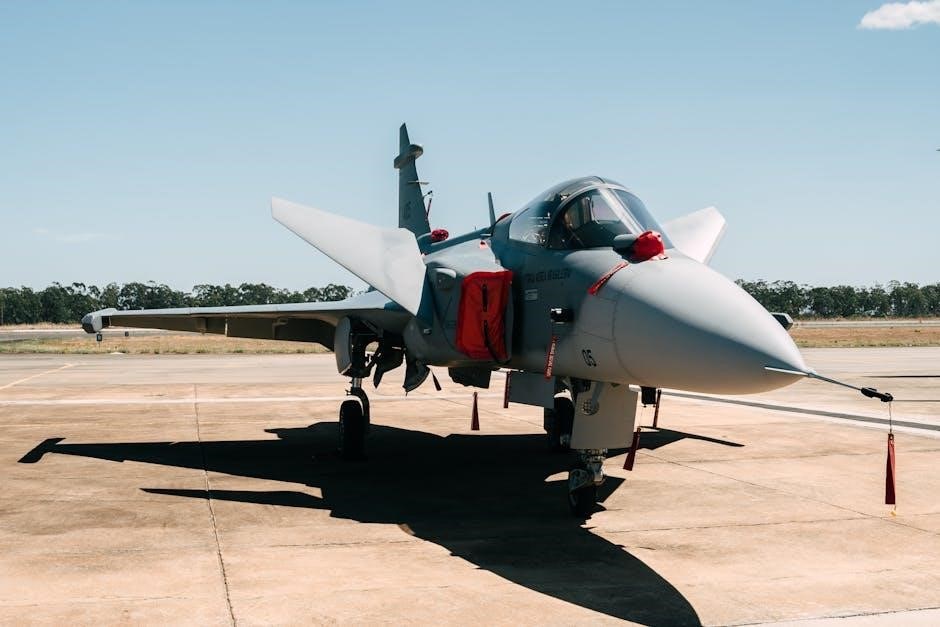
Rafale PDF documentation reveals the aircraft’s versatility extends beyond missiles, incorporating a range of other weapon systems for diverse combat scenarios. These resources detail the integration of laser-guided bombs, unguided rockets, and a 30mm cannon for close-in combat and strafing runs; The PDFs emphasize the Rafale’s ability to carry a substantial external payload, maximizing its offensive capabilities.
Analysis of these documents indicates the Rafale can also deploy jamming pods and reconnaissance equipment, enhancing its electronic warfare and intelligence-gathering abilities. While detailed specifications are often limited, the PDFs confirm the aircraft’s adaptability to various mission profiles. The Rafale’s flexible weapon carriage points and advanced avionics allow for rapid reconfiguration, ensuring it remains a formidable multirole fighter, as outlined in the available PDF guides.